How to Use ChatGPT Without Writing the Same Bland Copy as Everyone Else
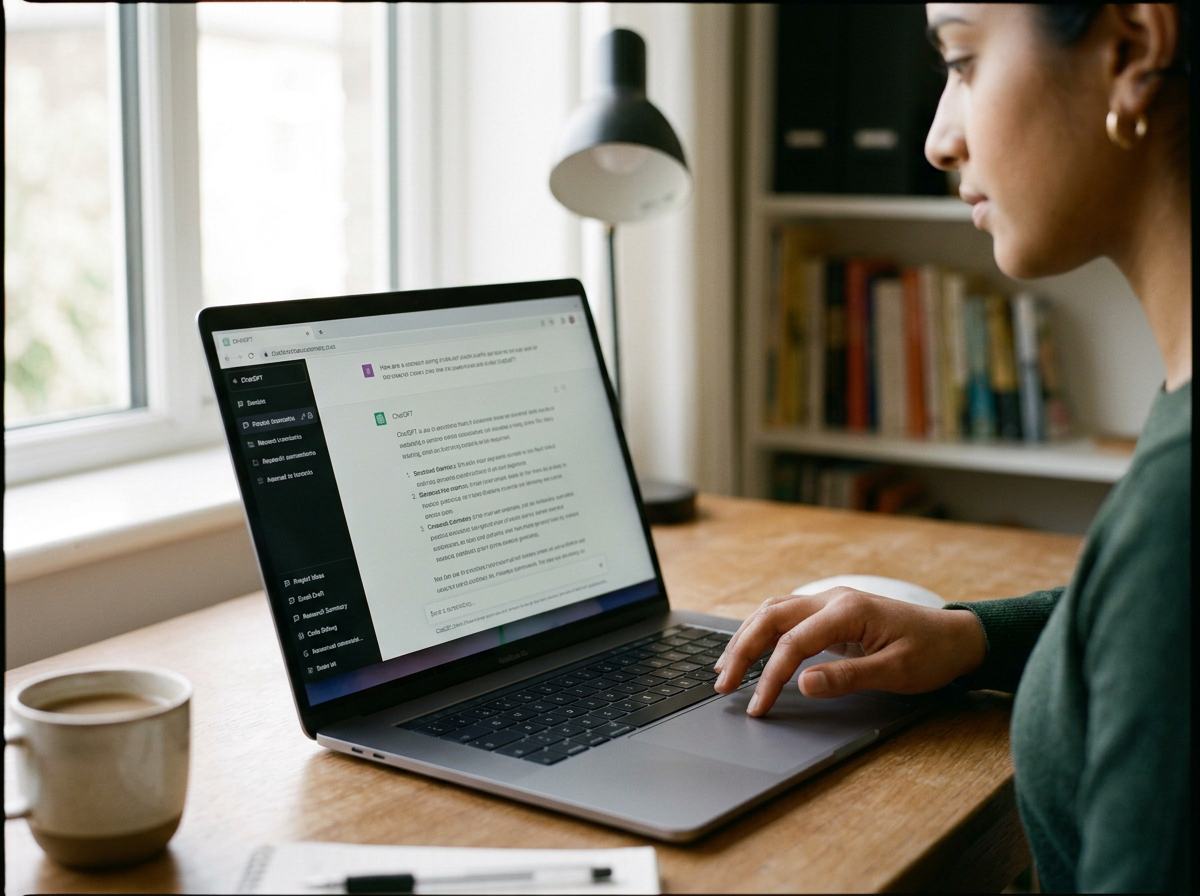
You ask ChatGPT to write an email announcing your new offer.
It thinks for approximately four seconds before handing you this:
“In today’s fast-paced digital landscape, it’s more important than ever to unlock your potential and elevate your business.”
Fantastic.
Except you have never once said “fast-paced digital landscape.” You don’t “unlock potential.” And the only thing being elevated is your blood pressure.
So you try again.
“Make it sound more human.”
Now it’s calling your reader “friend,” sprinkling emojis everywhere, and saying “Here’s the tea.”
Somehow, this is worse.
ChatGPT can help you write faster and get past the blank page. But when you give it the same vague instructions everyone else gives it, you tend to get the same vague copy everyone else gets.
So, how do you make ChatGPT sound like you?
First, you need to understand a few things going on behind the scenes. Most importantly…
ChatGPT Doesn’t Really Know What You Sound Like.
It doesn’t automatically know that your humor is dry, your sentences are short, or you would sooner launch your laptop into traffic than use the phrase “step into your power.”
These AI models learned how to write by studying a gigantic amounts of writing created by other people. So when you give it a vague request like “write me an email,” it pulls from the words, phrases, and patterns that show up most often.
In other words, it gives you the average of what everyone else sounds like.
So if you want something better than average, you have to explain what makes you different.
Your Voice Is More Than a List of Adjectives
Words like warm, witty, and conversational may feel descriptive, but they leave plenty of room for interpretation.
Your version of witty could be someone else’s idea of deeply embarrassing.
ChatGPT needs specific direction about how you communicate. Better yet, it needs examples of your real writing so it can recognize patterns you may not know how to explain.
Your voice lives in the details: the words you choose, the length of your sentences, the examples you notice, the way you build an argument, and the specific things you find funny.
That’s why giving ChatGPT examples of your writing can improve the result. It has something concrete to study instead of trying to guess what “casual but still professional” means.
It also helps to identify what sounds distinctly unlike you. The phrases you avoid and the writing habits that make you cringe are part of your voice too.
ChatGPT Can’t Supply the Part That Comes From Your Brain
Even with great voice instructions, ChatGPT still needs an idea worth expressing.
Your point of view doesn’t come from sentence length or punctuation. It comes from what you believe, what you notice, and how you interpret the subject.
If you ask ChatGPT to write about a broad topic without giving it your opinion, stories, or insights, it has to reach for the most predictable ideas available.
That’s how you get those boring, bland outputs that say absolutely nothing.
What makes writing interesting is the point of view.
Ten people can write about the exact same topic. Nine might repeat the advice everyone has already heard. The tenth might challenge it, tell a story that makes it click, or point out the weird little truth everyone else missed.
Which do you think people will remember?
So before you use ChatGPT, come in with an idea already in place. Tell it what you want to explore, challenge, or share. Give it your point of view, then let it help shape that thinking into a draft.
The First Draft Still Needs a Human
Read the draft. Look for phrases you wouldn’t say, jokes you wouldn’t make, and paragraphs that sound impressive without communicating anything specific.
Then revise.
The more clearly you can explain what isn’t working, the more useful ChatGPT becomes. And that’s where knowing the fundamentals of copywriting starts to matter.
You need to recognize when a message is unclear. You need to know whether the reader has a reason to care. You need to notice when the argument loses power or a claim doesn’t feel believable.
Otherwise, how can you know when ChatGPT gets it right… and how to fix it when it gets it wrong?
AI Is a Tool. Your Judgment Is the Advantage.
You don’t need to avoid ChatGPT to protect your voice. You need enough understanding of your own writing and your own audience to direct it well.
The people getting the best copy from AI aren’t necessarily the ones with the fanciest prompts.
They’re the ones who can recognize good copy when they see it.
They’re the one who know what to look for and what to ask for… and then can use these AI models to create it faster.
So, sadly, you can’t just skip past the fundamentals. If you want good AI copy, you have to know what makes good copy, period.
I can get you up to speed on all of that and more inside the Sales Copy Playbook.
It’s a go-at-your-own-pace, 90-minute guide to understanding your audience, making your message more persuasive, and evaluating your own writing. So you can make stronger decisions whether you’re working with ChatGPT or staring down the blank page alone.
SEE IF THE SALES COPY PLAYBOOK IS FOR YOU →
And remember, the best draft is a finished one.
So get writing!